Source Front Suspension MTB Bicycle for Commuting, Trail, and Fitness
Compare 30 front suspension MTB bicycle options from Chinese manufacturers with varying gear speeds, frame materials, and wheel sizes. Buyers can evaluate specifications like 21-speed or 24-speed systems, steel or alloy frames, and mechanical disc brakes to find suitable models for diverse riding needs.
Key considerations
Products List


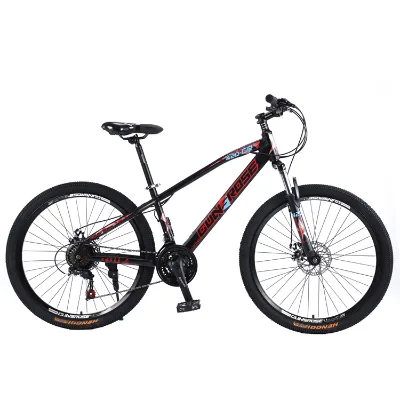


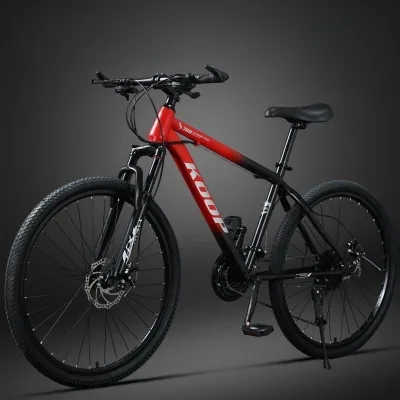
Comprehensive Sourcing Guide
Strategic Sourcing Guide for Front Suspension Mountain Bicycles
Understanding Technical Specifications and Component Variability
When sourcing front suspension mountain bikes, buyers must navigate a landscape of diverse technical configurations rather than a single standardized product. The available inventory reveals a spectrum of wheel sizes, ranging from 26 inches to larger formats like 27.5 and 29 inches. This variation directly impacts the ride geometry and the intended terrain for which the bicycle is optimized. A 26-inch wheel size is often associated with traditional mountain biking agility, while larger diameters offer improved rollover capabilities over obstacles. Frame sizes also exhibit significant variance, with observed specifications including 16-inch and 21-inch options, alongside general size categories. This diversity necessitates a precise definition of the target demographic and usage scenario before initiating a procurement request.
The drivetrain specifications further illustrate the complexity of this category. The observed product data indicates a wide range of gear configurations, including 12-speed, 21-speed, 24-speed, and 27-speed systems. The presence of specific component details, such as a steel chainwheel and crankset with tooth counts of 23/34/42t and a length of 170mm, alongside a 7-speed freewheel (14-28t), suggests that many units in this category are designed for durability and cost-effectiveness rather than high-end performance. The chain specifications, noted as 1/2"*3/32" with 116 links, are standard for this class of bicycle. Buyers must verify that the gear system matches the intended rider's skill level, as a 12-speed system implies a different maintenance and shifting requirement compared to a 7-speed setup.
Frame construction is another critical variable. The material data points to both steel and aluminum/alloy options. Steel frames are often selected for their shock-absorbing properties and repairability, while aluminum frames offer a lighter weight profile. The observation of "Steel or Alloy" as a frame attribute indicates that suppliers may offer both materials depending on the specific model code, such as the TJ-MTB or MTB-004 series. Additionally, the front fork is consistently identified as a suspension unit, which is the defining characteristic of this keyword. The bottom bracket is noted as cotterless, a standard modern design that facilitates easier maintenance. Understanding these specific component combinations is essential for matching the product to the buyer's quality and performance expectations.
Compliance, Certification, and Regulatory Standards
Navigating the regulatory landscape for bicycle imports requires a rigorous verification of certifications and standards. The supplied product facts explicitly mention CE certification, which is a mandatory requirement for selling products within the European Economic Area. This certification indicates that the bicycle meets essential health, safety, and environmental protection requirements. However, the presence of CE on some listings does not automatically guarantee that every unit in a bulk order possesses this status, as product attributes are often observed rather than universally applied across all SKUs. Buyers must request current, valid certificates for the specific models they intend to purchase.
Beyond CE, the data references ISO9001 and SGS standards. ISO9001 relates to quality management systems, suggesting that the manufacturing facility has processes in place to ensure consistent product quality. SGS is a global inspection, verification, testing, and certification company, and its mention implies that third-party testing may be available or required for certain shipments. It is crucial to distinguish between a factory's internal quality management certification and the specific product safety certifications. The "prod_standard" field in the data shows entries like "By customized" and "26''", which are ambiguous. Buyers should not rely on these generic entries for compliance. Instead, they must explicitly request documentation proving that the specific batch of bicycles complies with the safety standards of the destination market, such as ISO 4210 for bicycle safety requirements.
The origin of the products is consistently listed as China, with specific locations including Hebei Province and Xingtai City. While this provides a geographical context, it does not define the regulatory compliance of the goods. The "prod_standard" entry of "21/24/27 speed" is a specification, not a safety standard. Procurement teams must ensure that the supplier can provide a Declaration of Conformity (DoC) for the specific model, particularly regarding the braking systems. The observed "Mechanical Disc Brake" configuration must be tested to ensure it meets the stopping power and durability requirements of the target market. Relying solely on the listed "CE" attribute without verifying the specific test reports for the braking system and frame integrity poses a significant compliance risk.
Cost Drivers and Pricing Dynamics
The pricing for front suspension mountain bikes is influenced by a complex interplay of materials, component specifications, and customization levels. The observed price range in the market data spans from 20.5 to 300 USD, a variance that reflects the difference between entry-level steel-framed models and higher-specification aluminum or alloy versions. The lower end of this range likely corresponds to bicycles with steel frames, basic 7-speed or 21-speed drivetrains, and standard mechanical disc brakes. Conversely, the higher price points are associated with aluminum frames, higher gear counts such as 24 or 27 speeds, and potentially more advanced suspension forks.
Material costs are a primary driver of these price differences. The choice between steel and aluminum/alloy frames significantly impacts the final cost. Steel is generally more affordable but heavier, while aluminum offers a better strength-to-weight ratio at a higher price. The saddle shell material is another cost factor, with observations of both leather and imitation leather options. Leather typically commands a premium, whereas imitation leather is a cost-effective alternative. The packaging method, listed as "Carton," "Ab Carton," or "CTN," also contributes to the logistics cost. "Ab Carton" might imply a specific reinforced packaging standard, which could add to the unit cost but reduce damage rates during shipping.
Customization is a significant variable in the cost structure. The data indicates that customization is available, and the "prod_standard" is listed as "By customized" for some entries. This suggests that buyers can request changes to frame geometry, color, component brands, or gear ratios. While customization allows for tailored products, it often introduces additional costs related to tooling, setup, and minimum order quantities (MOQ). The observed MOQ range of 1 to 500 units highlights the flexibility of the supply chain. Buyers seeking lower MOQs may face higher per-unit costs, while those ordering near the 500-unit cap can likely negotiate better pricing. The net weight of 16 kg and gross weight of 16.5 kg are consistent across many listings, suggesting that shipping costs will be relatively predictable, though the density of the cargo will depend on the specific packaging configuration.
Typical Applications and Market Segmentation
Front suspension mountain bikes serve a broad spectrum of applications, ranging from recreational riding to specific utility purposes. The product attributes indicate that these bicycles are designed for "Men" and "All Ages," suggesting a versatile market appeal. The "Type: Mountain Bike" classification confirms their suitability for off-road terrain, including trails, gravel paths, and light forest tracks. The presence of a suspension front fork is critical for absorbing shocks on uneven surfaces, making these bikes ideal for riders who encounter rough terrain but do not require the full capability of a full-suspension bike.
The specific gear configurations observed, such as 21, 24, and 27 speeds, cater to different riding styles. Lower gear counts are often sufficient for casual riders or those navigating moderate inclines, while higher gear counts provide the versatility needed for more aggressive climbing or varied terrain. The frame sizes, including 16-inch and 21-inch options, indicate that these bikes are available for different rider heights, supporting the "All Ages" designation. However, the "Used for: Men" attribute suggests that the primary marketing focus may be on adult male demographics, though the physical dimensions allow for broader use.
The intended use also influences the choice of components. The mechanical disc brake system is a robust choice for wet or muddy conditions, which are common in mountain biking environments. The steel or alloy frame material offers a balance between durability and weight, suitable for both daily commuting on rough roads and weekend trail riding. The "prod_model" codes, such as HC-MTB-20945 and MTB-008, likely correspond to specific model lines designed for different market segments. Buyers should align the model selection with the specific needs of their customer base, whether that involves high-volume distribution of entry-level bikes or a niche market for higher-specification models.
Supplier Evaluation and Verification Protocols
Evaluating suppliers for front suspension mountain bikes requires a multi-faceted approach that goes beyond simple price comparison. The data indicates that suppliers are located in Hebei Province, specifically Xingtai City, a known hub for bicycle manufacturing. While this concentration of industry suggests a mature supply chain, it also necessitates careful vetting to ensure quality consistency. Buyers should verify the supplier's production capacity, quality control processes, and ability to meet specific customization requests. The "Customization: Available" attribute is a positive indicator, but it must be backed by a clear process for managing design changes and ensuring that the final product matches the agreed specifications.
Verification of certifications is paramount. The mention of CE, ISO9001, and SGS in the product data should be treated as starting points for inquiry rather than guarantees. Buyers must request copies of the actual certificates and verify their validity with the issuing bodies. It is essential to confirm that the certification covers the specific models being ordered, as a factory may hold a general ISO9001 certification but not have specific product testing for every SKU. The "prod_standard" field, which lists "By customized" or "26''", is insufficient for compliance purposes. Buyers should insist on a detailed specification sheet that outlines the exact standards met by the product, including frame strength, brake performance, and wheel integrity.
Supplier reliability can also be assessed through their packaging and shipping practices. The observed packaging options, including "Carton," "Ab Carton," and "1PCS/CTN," provide insight into their logistics capabilities. "Ab Carton" may indicate a higher standard of packaging designed to protect the bicycle during transit, which is crucial for maintaining product quality. Buyers should request photos of the actual packaging to ensure it meets their requirements for damage prevention. Additionally, the lead time and production capacity should be discussed, especially if customization is involved. The ability to meet the observed MOQ range of 1 to 500 units is a key factor, but buyers should also inquire about the supplier's ability to scale production if demand increases.
Quality Control and Long-Term Procurement Considerations
Implementing a robust quality control (QC) strategy is essential for mitigating risks associated with importing front suspension mountain bikes. Given the variability in specifications, such as the different gear speeds and frame materials, a standardized QC checklist is necessary. This checklist should include checks for frame weld integrity, suspension fork functionality, brake system performance, and drivetrain alignment. The observation of "Mechanical Disc Brake" as a standard component means that QC must specifically test the braking power and pad wear resistance. Similarly, the "Front Fork: Suspension" attribute requires verification of the suspension travel and damping characteristics to ensure they meet the product description.
Long-term procurement considerations involve building a sustainable relationship with suppliers that can adapt to changing market demands. The "Customization: Available" attribute suggests that suppliers are willing to work with buyers on product modifications. However, buyers must establish clear communication channels and documentation processes to manage these changes effectively. The "prod_model" codes, such as TJ-MTB and MTB-004, should be used as reference points for tracking specific product iterations. Consistency in model numbering and specification sheets will help in maintaining quality over time.
The weight specifications, with a net weight of 16 kg and gross weight of 16.5 kg, provide a baseline for logistics planning. However, buyers should be aware that customization or different component choices may alter these weights. Regular audits of the supplier's production line can help ensure that the quality remains consistent. The "Standard: ISO9001 SGS" mention implies a commitment to quality, but this must be validated through on-site inspections or third-party audits. Buyers should also consider the after-sales support provided by the supplier, including the availability of spare parts and technical support. The "Used for: All Ages" attribute suggests a broad market, which means the product must be durable enough to withstand varied usage patterns. Establishing a clear warranty policy and return process is crucial for long-term success in this category.
Comparative Analysis of Key Product Attributes
To facilitate informed decision-making, the following table summarizes the key product attributes observed in the market data. This comparison highlights the variability in specifications that buyers must navigate.
| Attribute Category | Observed Variations | Implications for Procurement |
|---|---|---|
| Wheel Size | 26", 27.5", 29" | Determines terrain suitability and rider preference; must match target market. |
| Frame Material | Steel, Aluminum/Alloy | Steel offers durability/cost; Aluminum offers weight savings; affects price and shipping. |
| Gear System | 12, 21, 24, 27 Speed | Higher speeds imply more complex drivetrains; impacts maintenance and rider skill level. |
| Frame Size | 16", 21", 27.5/29" | Critical for rider fit; requires clear sizing charts for different demographics. |
| Brake Type | Mechanical Disc Brake | Standard for this category; requires specific QC testing for stopping power. |
| Suspension | Front Fork (Suspension) | Essential for MTB classification; verify travel and damping quality. |
| Certification | CE, ISO9001, SGS | Verify validity and scope; do not assume all models are certified. |
| Packaging | Carton, Ab Carton, CTN | Affects damage rates and shipping costs; "Ab Carton" may offer better protection. |
| Origin | Hebei/China, Xingtai City | Known manufacturing hub; verify specific factory capabilities and quality control. |
| MOQ | 1 - 500 Units | High flexibility; lower MOQs may have higher unit costs. |
This table underscores the need for precise specification definition. Buyers cannot assume that a "front suspension MTB" will have identical features across different suppliers or models. The variability in wheel size, frame material, and gear systems requires a tailored approach to sourcing. By understanding these differences, buyers can select the right products for their specific market needs while managing risks related to quality and compliance. The data also highlights the importance of verifying certifications and packaging standards, as these factors significantly impact the final cost and reliability of the supply chain.
FAQs
What frame materials are available for front suspension MTB bicycles?
Front suspension MTB bicycles are available with steel or aluminum alloy frames. Steel frames offer durability and shock absorption, while aluminum frames provide a lighter weight profile for improved performance on trails.
Which gear configurations are commonly found on these mountain bikes?
Common gear configurations include 12, 21, 24, and 27 speeds. Buyers should verify the specific drivetrain, as some models feature 7-speed freewheels while others offer higher gear counts for varied terrain.
Can these bicycles be customized for specific buyer requirements?
Yes, customization is available for these front suspension mountain bikes. Buyers can request changes to frame geometry, colors, or component specifications, though this may affect minimum order quantities and lead times.
What certifications are typically required for importing these bicycles?
CE certification is explicitly mentioned for compliance with European safety standards. Buyers must also verify ISO9001 and SGS standards for quality management and third-party testing before placing bulk orders.
How do wheel sizes vary across different MTB models?
Wheel sizes vary from 26 inches to larger formats like 27.5 and 29 inches. The 26-inch size offers traditional agility, while larger diameters provide better rollover capabilities over obstacles.
What is the typical packaging method for shipping these bikes?
Bicycles are typically packed in cartons, with options including standard CTN or reinforced Ab Carton. Proper packaging ensures protection during transit and helps maintain product quality upon arrival.